


In our last post (https://bit.ly/3ND1rS1), we presented some estimates on the economic impact that low software quality generates to business and society, through 3 well-known reports from the worldwide software development community, in particular the quality industry. We promise to pinpoint here some cases of software failure reported in the study Software Fails Watch 5th Edition — Tricentis, published in February 2018 from English language headlines that marked the news of 2017 to well illustrate the resulting impact.
Impact on the stock market — Provident Financial
It is not always possible to directly tie software failure to a company’s falling share prices, but in August 2017 Provident Financial, a UK-based sub-prime lending company, lost £1.7 billion of its market value in just one day. The crash came after Provident Financial’s CEO announced that a software defect in a new release determined that only 57% of loan debt was collected on time, promoting the company to lose £120 million in profits over 2017. Following the announcement, Provident Financial’s CEO resigned, in one of the largest one-day share price drops in the history of the FTSE 100 blue chip index.
Impact on air transport — British Airways
On May 27, 2017, British Airways was left with its reservation, check-in, boarding and disembarkation systems down at 2 airports, forcing the company to rebook 50,000 people on 30 other airlines. Thousands of people were forced to wait hours on the tarmac to disembark, airport staff had to use whiteboards to display flight information, and tens of thousands of passengers’ luggage left “waiting” in warehouses are some of the mishaps resulting from this unavailability of their systems. Impact: over 1000 flights cancelled for 3 days, over 75,000 people affected, British Airways estimated compensation bill at over $200 million and British Airways share price dropped by over $220 million.
These 2 cases are very representative of the economic impact that malfunctioning software can have. But system failures can often determine a social impact no less, as we highlight below.
Facebook’s translation software causes a man to be wrongly imprisoned
A Palestinian man was wrongfully arrested by Israeli officials after Facebook mistranslated his post. The construction worker posted a photo of himself on a bulldozer, with the caption “Good morning” written in Arabic. Facebook translated the message to “Attack them” in Hebrew, and “Hurt them” in English. The hapless man was arrested by allegedly non-Arabic-speaking police, and considered a possible terrorist before the error was discovered. Facebook offered no explanation as to how the translation error occurred.
3 months of unreported child abuse reports
The state of Florida discovered that about 1,500 cases of child abuse had been overlooked due to a software glitch. The error caused the stories to be collected, but never forwarded to the correct jurisdictions for law enforcement follow-up. Although the flaw started in early February 2017, it was not discovered until May 2017, putting the safety of 1500 children at risk in the meantime.
These are some of the cases about software flaws listed in the Software Fails Watch 5th Edition — Tricentis study. We want to finish this compilation with an emblematic case that occurred shortly after the publication of this study and that mobilized the world, especially users and companies linked to civil aviation. We highlight below excerpts from an article in the respected Communications of the ACM publication: https://cacm.acm.org/magazines/2021/1/249448-boeings-737-max/fulltext, with its reflection on the episode.
Boeing’s 737 MAX: A failure of management, not just technology
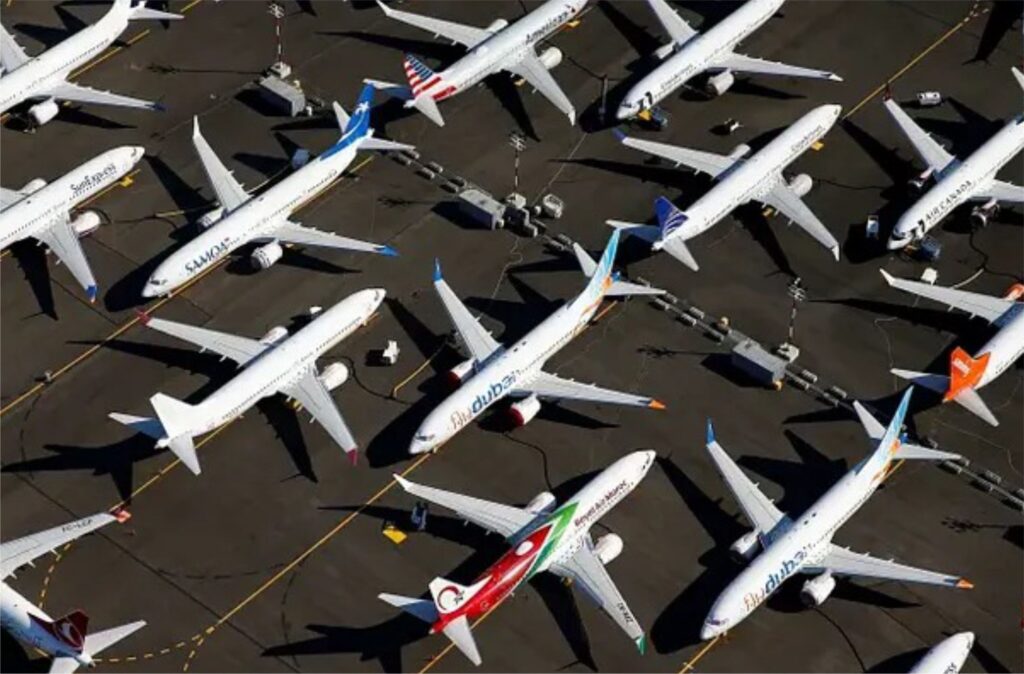
In September 2020, the US House of Representatives published a 238-page report on the 737 MAX disaster after an 18-month investigation. The report pointed to the computerized flight control system called the Maneuvering Characteristics Augmentation System (MCAS) as the technical cause of the two accidents in October 2018 (Lion Air in Indonesia) and January 2019 (Ethiopian Airlines in Ethiopia). The 737 MAX had been Boeing’s best-selling aircraft in its history, before worldwide government authorities grounded the fleet of nearly 400 aircraft — but only after the second accident. A technical system failure was the proximate cause of the disasters, which cost Boeing and the airlines billions of dollars in losses, and, much more tragically, the lives of 346 passengers and crew.
The causes of the 737 MAX accidents run through technology, to consider the complexity and unpredictability of a new technology involved, but mostly through the company’s management levels, where in a series of decisions, they put profits ahead of safety, didn’t think through the consequences of their actions, or didn’t welcome or investigate the messages passed on by the engineering team when they knew something was wrong.
One lesson is that even the best companies can fall prey to competitive pressures as they seek to remain financially viable, grow faster, or profit from shipping products faster and cheaper. One would think that airplane manufacturers and car companies would never compromise on profit security, since they are essentially in the business of safe transportation. This is not what happens in reality. For their part, executives, managers and engineers need to find a better balance between safety, quality and cost. Faster and cheaper sounds good in the short term, but it can lead to disaster if the resulting products do not have the expected quality and safety.
At least some people at Boeing knew that there might not be enough time for pilots to react to an MCAS malfunction, yet the company decided not to inform pilots that the system was working behind the scenes or provide simulator training. At least some people at Boeing knew that MCAS was dangerous because one sensor constituted a single point of a potentially catastrophic failure.
In short, the technology did not design itself or fail on its own, which is why the 737 MAX failure was primarily a management failure.
The Boeing case is well reported and publicized in the world media, most notably the recent Netflix documentary “Downfall: The Case Against Boeing”:
Watch Downfall: The Case Against Boeing | Netflix Official Site: https://www.netflix.com/title/81272421
https://spectrum.ieee.org/how-the-boeing-737-max-disaster-looks-to-a-software-developer
https://edition.cnn.com/2020/02/06/business/boeing-737-max-software/index.html
If you would like to know how we have helped important companies in the national and international scenario to promote an adequate software testing infrastructure, with significant loss reduction, please contact us (https://dbservices.pt).