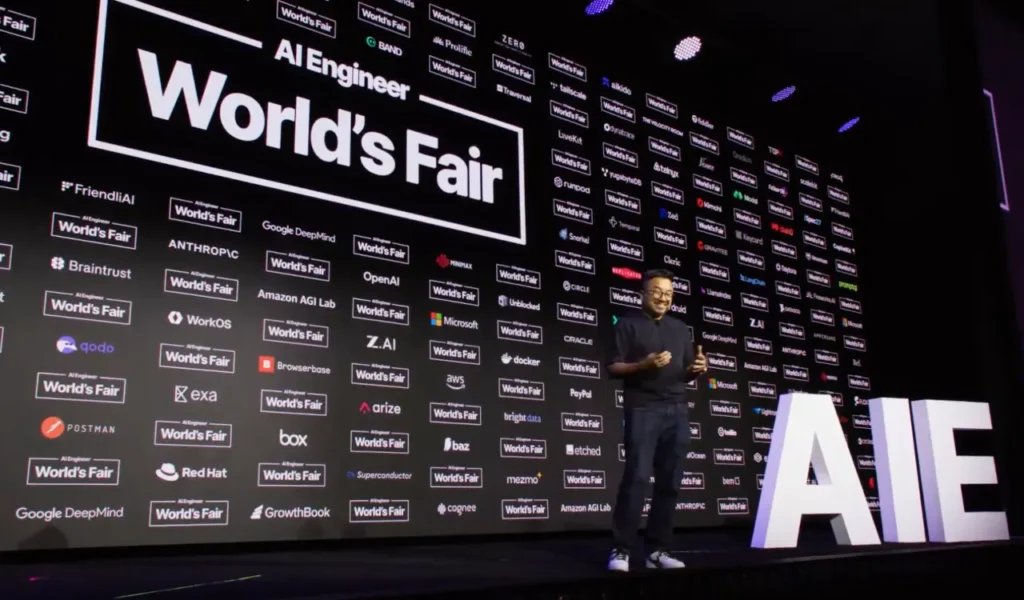
Between June 29 and July 2, 2026, San Francisco hosted one of the most prominent events on the use of AI in software engineering.
A full transition to asynchronous cloud agents, Codex adopted by 95% of non-engineers at OpenAI, and the definitive end of local-processing limitations..
The AI-for-software-engineering ecosystem has just crossed a new frontier. During recent visits to the OpenAI, Anthropic, and Cursor offices in San Francisco, it became clear that the mental model has shifted: AI is no longer just a local chat assistant — it now plays a central role in operating scalable infrastructure.
The central concept behind this shift is the migration to “Cloud Agents.” Even as these models’ execution capacity has surged thanks to ever-larger context windows, the physical and operational limits of local machines have pushed the industry to build asynchronous, persistent, and isolated execution environments in the cloud. Prominent figures in the field, such as Andrej Karpathy (Tesla and OpenAI), already point to this scenario as the new development standard.
Below are the main themes covered at the AI Engineering World’s Fair 2026:
1. Cloud agents are the next trend
The absolute strategic focus of OpenAI, Anthropic, and Cursor has shifted to remotely hosted agents. The goal is to support massive demand for complex automations that operate beyond the limits of local computing.
2. The definitive end of local friction (zero setup)
Native corporate interfaces — such as invoking and delegating tasks to Claude directly inside Slack — let any team member kick off robust workflows without needing to configure local servers or additional context tools.
3. Complete relief for developers’ hardware
Running multiple complex local agents (such as OpenClaw) degrades system performance and consumes heavy CPU. Shifting processing to the cloud resolves this physical bottleneck in software engineering.
4. OpenAI’s billion-dollar bet with the Ona acquisition
The purchase of the leading Cloud Development Environment (CDE) startup — formerly Gitpod — aims to provide secure, persistent, isolated sandboxes where Codex can continuously run ambitious tasks lasting hours or days, without depending on the user’s active session.
5. Cursor and the consolidation of mobile development
With the recent launch of its iOS app, Cursor proved that writing code and generating mergeable pull requests from anywhere has become viable, since the entire testing and heavy-compilation environment runs isolated on cloud virtual machines.
6. The rise of model “confession interviews”
With no immediate human loops in the cloud, Cursor developed an innovative approach: the models themselves undergo periodic interviews to “confess” invisible internal warnings and errors, reporting them directly to the teams.
7. New distributed-systems engineering challenges
Long asynchronous runs bring highly complex, non-trivial infrastructure problems, such as transparently managing and transferring an agent’s execution state from one node to another if a server goes down mid-process.
8. The technical convergence that made the movement possible
This revolution is only happening now due to the simultaneous maturity of four factors: 1. robust frontier models (such as Opus 4.5 and GPT-5.4), 2. standardized context ecosystems (such as MCP), 3. context windows of up to 1 million tokens, and 4. massive GPU clusters at cloud providers.
9. Mass adoption of coding tools by non-developers
One of the most surprising data points reveals that, at OpenAI, more than 95% of staff in non-technical roles use Codex (engineering-focused) rather than traditional ChatGPT, through specialized interfaces built to streamline their daily business routines.
10. Redefining engineering’s core tasks
As agents increasingly take over autonomous code writing in the cloud, software engineers’ work is rapidly shifting toward architecture and optimization of the infrastructure where these agents operate.